Representing Form Through Color & Value

Hay y’all

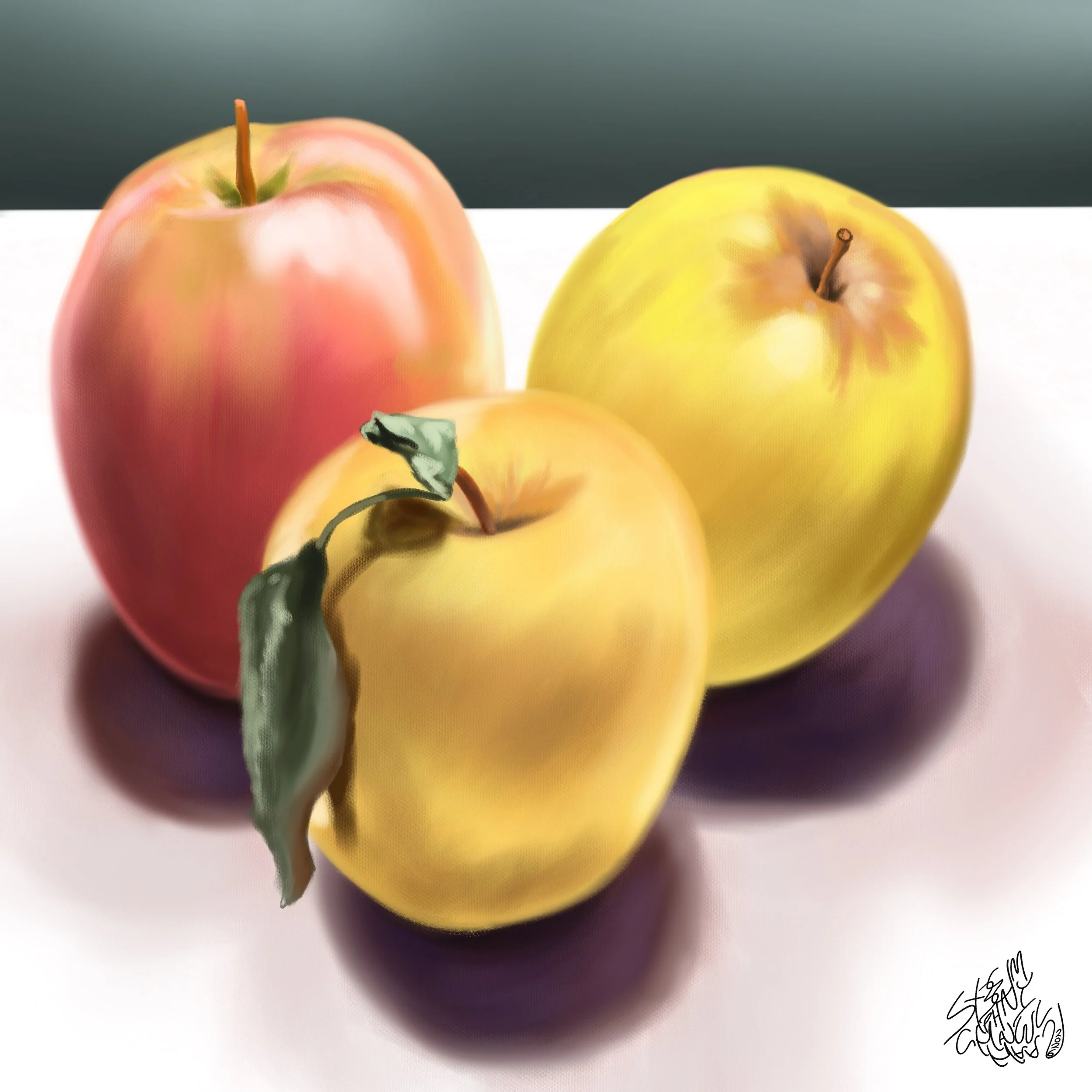
Me and a lady friend went picking apples for some fall festivities this past weekend, and I figured I might as well make an art opportunity out of it. So I decided to do a study of the apples.

It’s been really interesting because I’ve been doing many more portraits lately. But I started this whole new series, or practice, of observational work by drawing objects, and the way you approach drawing a human is just so different from the way you approach drawing an object. The focus is different.

Portraiture is also, by nature, much more humbling than drawing an object. So it felt nice to do this apple study and feel somewhat relieved from the anxiety I sometimes get when I’m trying to capture someone’s likeness and wondering whether I’m going to make them look like a monster. If that makes sense.

So anyway, here’s my apple study. Trying to get a little festive with it. Trying to keep consistent.

One thing I’ve noticed is that I’m really good at digging into the details and making a whole two-hour study. But one thing I really want to mess with is: how do I do a 15-minute color study? How do I do a 30-minute color study? I can do a 15-minute line drawing, but how do I do a 15-minute color study and still produce a good result?

And I think that ties into this whole idea of style. For whatever reason, I feel like I’m going to find my style through observational work and through quicker studies, because you have to make quicker decisions. You don’t have time to overthink every little thing.

Another thing that’s really interesting is watching the line disappear.

I grew up as a cartoonist, so I’m always thinking about representing form through line. But now we’re talking about representing form through value and color. And with this study in particular, I’m trying to let the line disappear.

Anyway, I hope you enjoy.

Sitting Down With Tyler

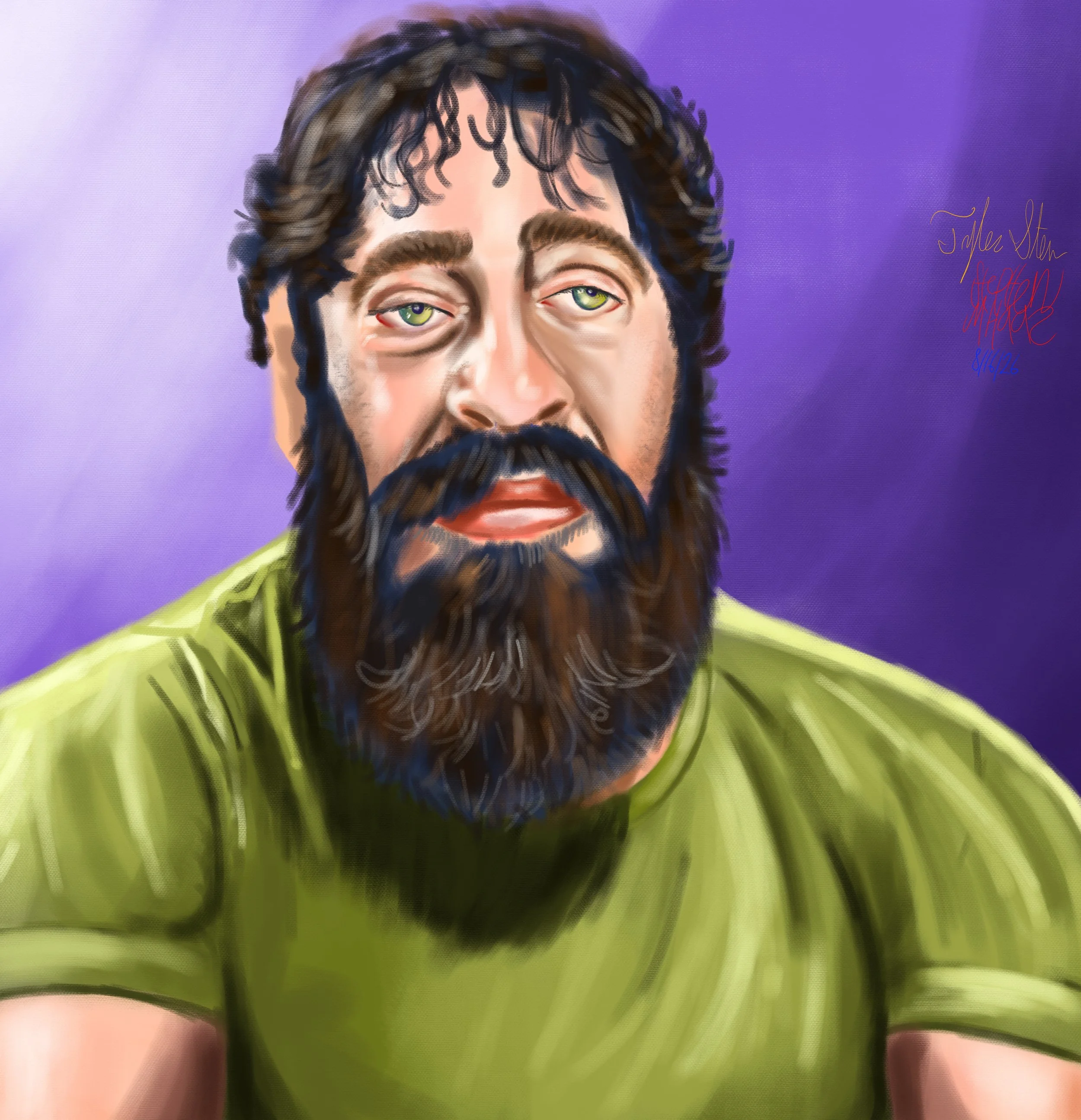
I got a chance to sit down with a dear friend, Tyler, today.

Do you ever have that feeling where you never really got a chance to get super close to or hang out with somebody, but anytime you’d see them for a moment, you’d end up having some enjoyable conversation? You just kind of develop this shared, mutual respect without ever really knowing each other that well.

Tyler was definitely one of those people.

I’ve known the dude for probably a little over a decade at this point, and I never really got the chance to sit down and pick his mind. But I always got the sense there was a lot more under the hood.

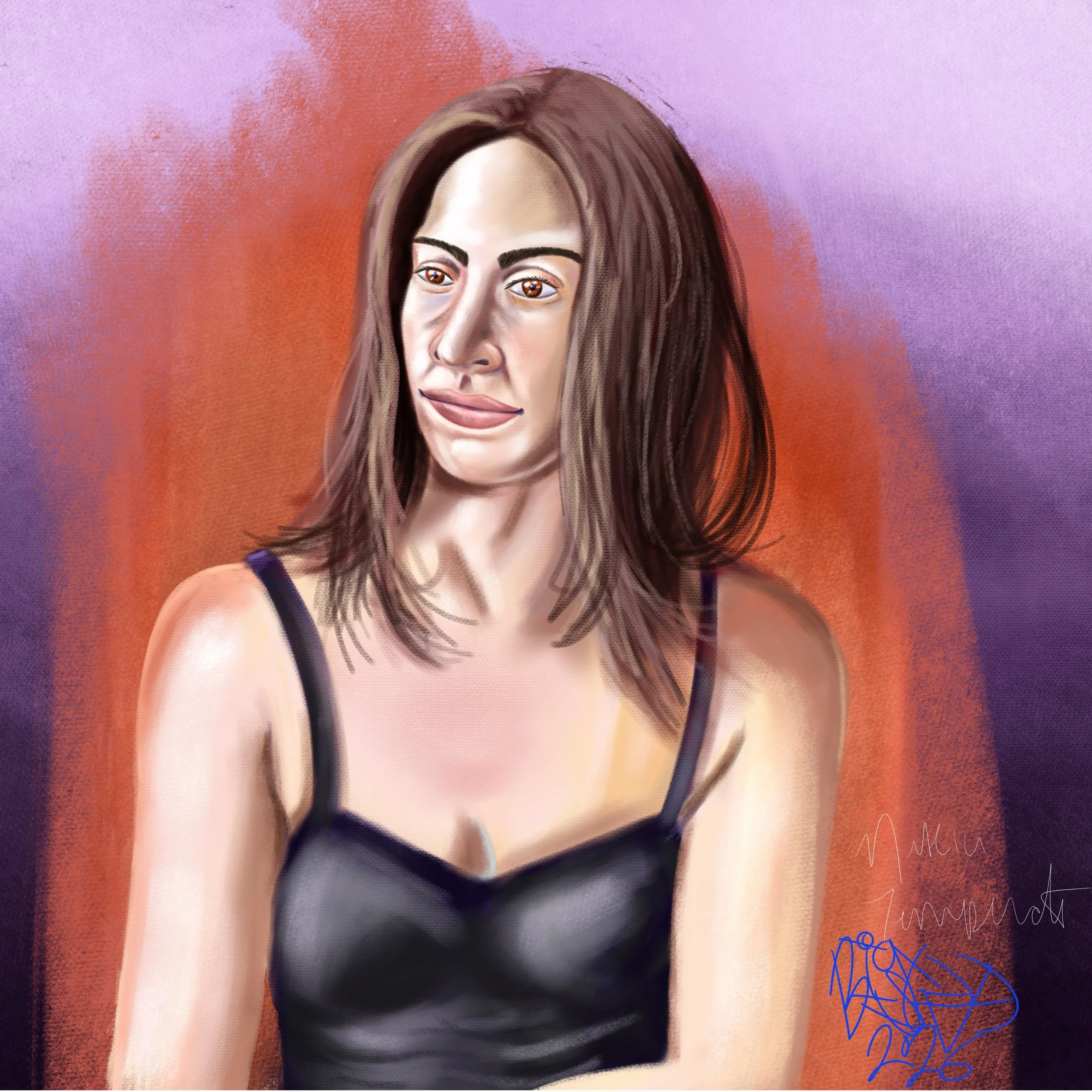
Sure enough, I got to sit down with Tyler today. He volunteered to be drawn when I put an ad out on social media looking for people to draw, and I obliged. He was my first subject, as it were.

And I gotta say, I was not disappointed in my conversation with Tyler.

The conversation had both depth and breadth. We touched on all things life: video games, music, anime, gardening, hiking, and the deep esoteric. It was nice to just let the conversation be free-flowing and see where it went.

It’s also interesting to sit around with somebody for two hours who you’ve never really spent that kind of time with before.

That’s always something I think about before I do these portraits: whether or not the person is going to be able to endure sitting there, being looked at, for that long. I certainly don’t know if I could do it.

My ADHD mind needs to be doing something.

And honestly, sitting down with somebody and drawing is how I hang out. It’s how I quiet my mind.

So it was a really nice afternoon.

I’m thankful I finally got the chance to catch up with Tyler, and I’m also really thankful that I’ve gotten to do so many of these studies now. I’ve been doing them consistently enough that they’re starting to feel like their own little practice—a reason to sit down with someone, look at them closely, draw them, and actually spend some time together.

And I think that’s pretty special.

Weekly Observational Study: The Ugly Part

Just finished up my weekly observational study at the diner, and I kind of ran out of things I wanted to draw on the table.

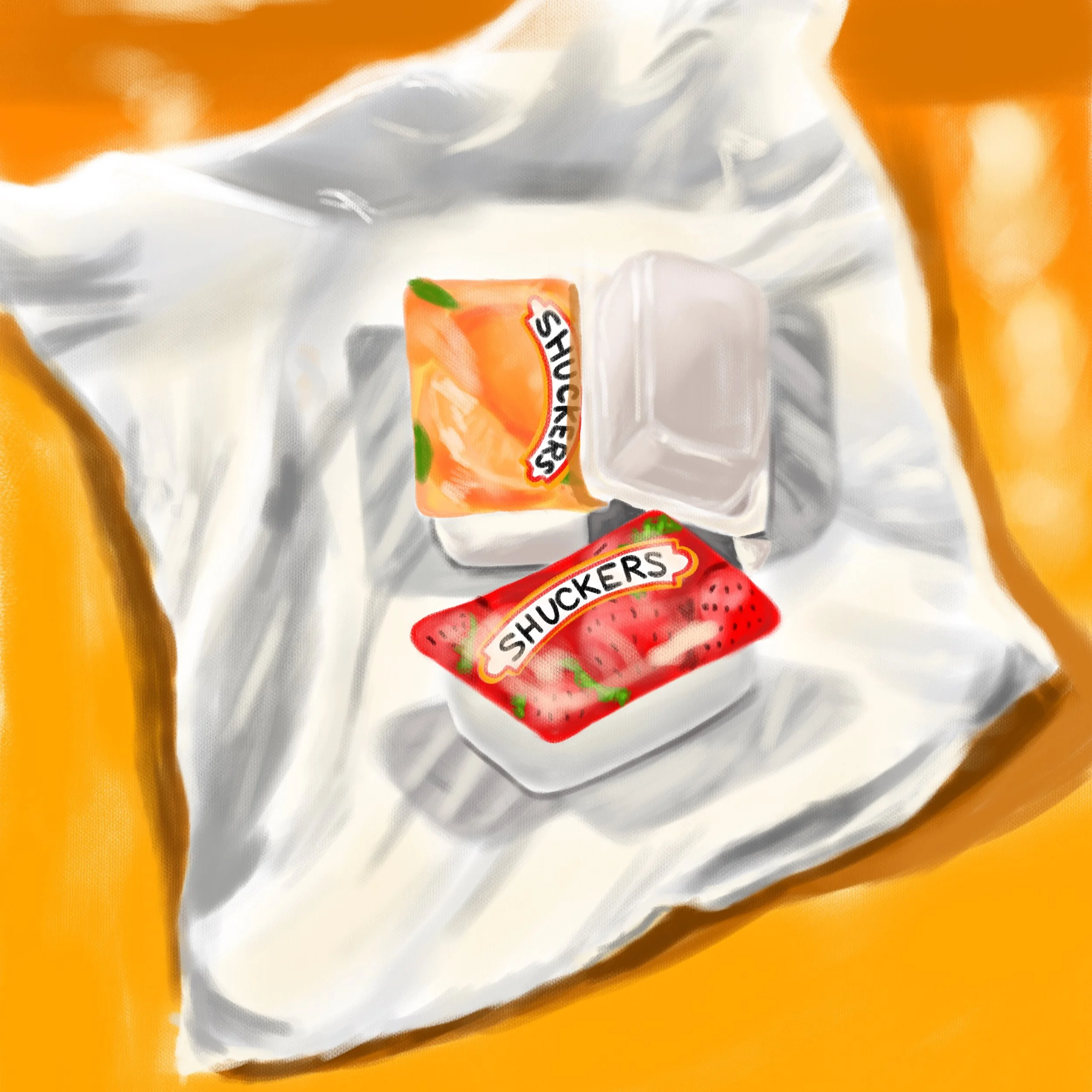
I had drawn a coffee cup, a sugar dispenser, some packets of jelly. I started thinking, Well, what more of the condiments can I draw? What’s going to be fun?

So I realized maybe it was time to start bringing some of my own props.

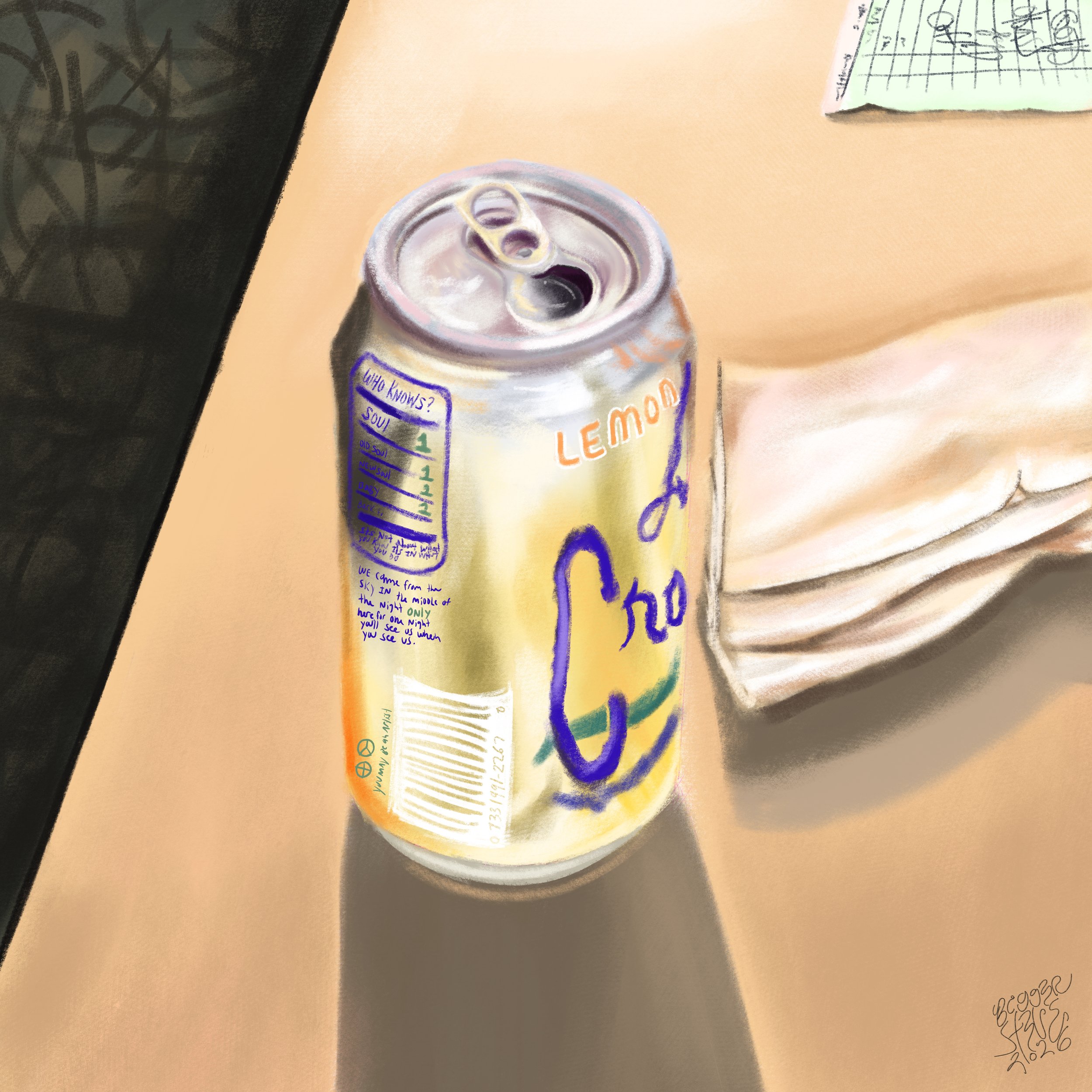
I was a little nervous about it. I didn’t want them to get on me for bringing something into the diner, but I decided to bring a LaCroix can.

There’s something really beautiful about the way light bounces off aluminum, especially the aluminum of a LaCroix can. You can see more of the actual metal than you might on something like a Coke can. The printing almost feels transparent in places, so the aluminum itself comes through. Light just dances across it.

But what I really want to talk about today isn’t the LaCroix.

It’s the ugly part.

While I was painting this, I felt something more strongly than I have during any of the other studies I’ve done here. There’s a point in the painting where the whole thing is just fucking ugly.

And the confusing part is that you’re actually doing everything right.

That’s one of the strange things about observational painting, especially when you’re doing color studies. So much of color is about context. You might be painting a beautiful reflection on the aluminum, but if you haven’t painted the top of the can yet, or the tab, or the hole where you drink out of it, that beautiful reflection doesn’t necessarily look beautiful anymore.

It doesn’t have anything to relate to.

The individual pieces don’t make sense until the whole picture starts coming together.

And I think there’s something really profound about that.

Because there’s a point in almost any endeavor where you’re doing the right things, but you don’t have enough context yet to see that you’re doing the right things.

And that’s where you start second-guessing yourself.

Am I doing this right?

Did I make the right decision?

Do I actually have the skills to do this?

Maybe this isn’t working.

And I think that kind of skepticism can pull you out of the moment.

Instead of listening to your intuition and continuing to do the work, you start watching yourself do the work. You start analyzing every decision. You start wondering whether you’re supposed to be here at all.

And that’s the point where fear can take over.

But if you can get through that part—if you can let go of the need to know whether you’re doing it right—you get to something else.

Trust.

And after trust, flow.

Your senses sharpen. You start seeing the colors more clearly. You start noticing subtle differences you couldn’t see before. You stop trying to force the painting into existence and start responding to what is actually in front of you.

And I think this happens in everything.

Basketball. Boxing. Writing. Painting. Building a business. Learning an instrument. Really anything you care enough about to become good at.

There’s going to be a part where your work doesn’t have context yet.

It doesn’t look good.

Nobody understands it.

Maybe nobody is paying attention.

Maybe even you don’t fully understand it.

And I think that’s where a lot of people give up.

We tend to frame our passions around the moments when we arrive. We imagine the finished painting. The championship. The book on the shelf. The followers. The abundance. The paycheck.

We imagine the destination.

But we don’t always prepare ourselves for the part where we’re standing in the middle of the fucking mess.

The part where we’re not sure.

The part where our work looks ugly.

The part where we’re putting pieces into place without being able to see the final picture yet.

Maybe that’s actually where the strength is built.

Maybe the practice isn’t just about learning how to paint an aluminum can.

Maybe these studies are a meditation on getting through the uncomfortable part without abandoning yourself.

Learning to tolerate ambiguity.

Learning to trust your intuition when you don’t have enough evidence yet.

Learning to keep going when the picture hasn’t come together.

Because eventually, if you stay with it, the context arrives.

The pieces start talking to each other.

And suddenly, what looked ugly ten minutes ago makes sense.

So maybe that’s what I’m practicing here.

Not just painting.

Persevering.

Having patience with the part of the process where I can’t yet see what it’s going to become.

Maybe you can practice that, too.

You’re Not Worth Much Unless You’re Selling It

You’re Not Worth Much Unless You’re Selling It

Am I worth less as an artist if there’s not a monetary value attached to what I make?

How come commerce and talent have become so inextricably bound?

I’m not saying I don’t want to make a living doing what I love. I do. I believe our passions can also be our careers.

But I also believe we contain multitudes far beyond what someone is willing to pay us. Far beyond how an algorithm responds to our output. Far beyond whether or not you can throw an advertisement on what I produce.

I refuse to let that be where the story ends.

I refuse to let a marketing strategy, or whether or not I made the front page become the final arbiter on my worth as an artist.

As long as I can remember, I’ve sold my art.

And, if I’m being honest, for almost as long as I can remember, I’ve tied my sense of worth as an artist to its income and its outcome, to the opportunities it created, the attention it received.

I’m tired of carrying that equation around.

That isn’t to say I don’t want to profit from my work. It isn’t to say I don’t believe in building a sustainable creative career. I do.

But I also think there’s something sacred that gets lost when every drawing, every painting, every idea has to justify itself with a dollar sign before it earns the right to exist.

Lately I’ve been trying something different.I’m taking a walk on the wild side. I’m trying to see again.

I’m breaking down the walls, throwing out the guardrails, kicking away the training wheels, and allowing myself to make work simply because something inside me wants to make it.

Art is my dowsing rod.

It has always been the thing that helps me discover what’s buried beneath the surface. It points toward meaning. Toward healing. Toward spirituality. Toward questions I didn’t even know I was asking.

It has always been so much more than a product, so much more than a consumer debt elimination tool.

This morning I sat in a diner for three hours, doing a still life. These were the thoughts that came to me as I walked out the door, these were the thoughts that stayed with me.

Maybe the value of our work isn’t something we discover after someone is willing to buy it.

Maybe some of its greatest value exists long before anyone else ever sees it, in the moment we get to share with it.

Because we live in a world today where every second is spoken for and every penny has its purpose.

What if our art was just for us for a few moments every now and again? What if we started rejuvenating ourselves with our art the way we invigorate all of our fans and patrons?

The beautiful thing is it doesn’t have to be a What if.

Seeing Things Different

Long time, no see. Long time, no talky.

I’m starting this blog back up because I want to start putting something into the world again.

For a long time, I tried to keep up with Instagram, YouTube, newsletters, you name it. I genuinely enjoyed those things, but I also have a pretty strong perfectionist streak. I found myself spending more and more time building the business I thought I needed, and less and less time actually making art. Looking back, that’s been a pattern for as long as I can remember.

This past year has been one of the most pivotal years of my life because I finally put my foot down. I slowed down, took a breath, and started asking what actually needed to change.

I’ve gone by SMH for the last decade. They’re my initials, and that name has served me well. But I reached a point where I realized I needed to stop asking how to grow that version of myself and start asking what comes next.

For the past year, I’ve been working with a mentor, trying to find the direction I was really looking for. I feel like I’ve finally started to find it.

The biggest lesson I’ve learned is simple: the art and the message have to come first. Before the algorithms. Before the social media strategy. Before the metrics. Before the business systems. Before the money. If I don’t protect the joy of making the work itself, none of the rest of it matters.

So I’m starting small.

For now, I’ll be sharing weekly studies simple drawings where I sit down and try to see the world a little more clearly. They aren’t perfect, and they don’t have to be. They exist because I made them.

Over time, I hope to share more here: thoughts from my book, newsletters, and whatever else grows naturally from this process.

More than anything, I just want to fall in love with making art again.

Thanks for stopping by. You’ll be hearing from me again soon.